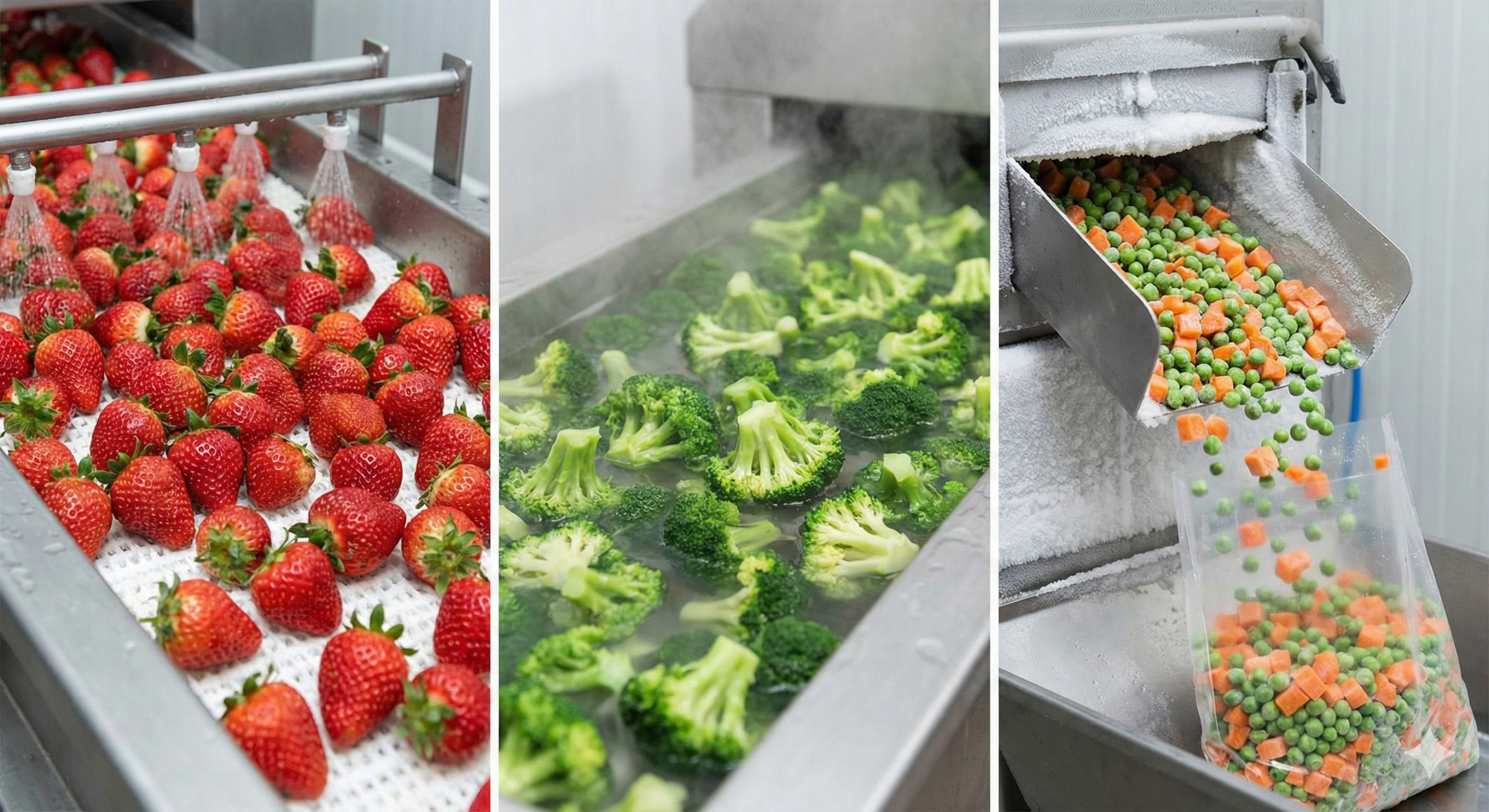
How Frozen Fruits and Vegetables Are Processed
Frozen produce quality begins long before it reaches the freezer. It begins on the farm, with considerations such as harvesting timing, handling, and speed.
High-quality frozen fruits and vegetables are typically processed in a controlled system designed to keep produce:
-
Clean
-
Safe
-
Consistent
-
Stable for storage and transport
Step 1: Harvesting at the Right Time
For freezing, produce is often harvested when it’s:
-
Mature
-
Flavorful
-
Suitable for freezing texture
This matters because freezing doesn’t “improve” produce; it locks in what’s already there.
Step 2: Sorting and Washing
After harvest, produce goes through sorting to remove:
-
damaged pieces
-
foreign materials
-
inconsistent sizes (depending on product specs)
Then it’s washed to reduce surface dirt and contaminants.
Step 3: Cutting, Peeling, or Preparing
Depending on the product, this step can include:
-
peeling (like peas, certain fruits)
-
dicing/slicing (like carrots, mango, strawberries)
-
trimming (like green beans)
-
pitting (like cherries)
Many suppliers standardize cuts for easier cooking and consistent portioning.
Step 4: Blanching (Mostly for Vegetables)
Most frozen vegetables are blanched briefly before freezing. Why?
-
it slows enzyme activity that causes flavor and color changes
-
it helps preserve texture during storage
-
it improves product stability
Fruits usually skip blanching because they’re more often used raw-ish (smoothies, desserts), and blanching would affect taste and structure.
Step 5: IQF (Individually Quick Frozen)
This is the big one.
IQF means each piece is frozen individually at high speed, which helps:
-
prevent clumping
-
protect texture
-
make portioning easier
-
improve visual quality
IQF is why good frozen berries pour like individual berries instead of one frozen brick of sadness.
Step 6: Packaging and Storage
Packaging is designed to protect against:
-
moisture loss (freezer burn)
-
oxygen exposure
-
contamination
Then the product enters frozen storage and stays within strict temperature ranges.
Step 7: The Cold Chain (Where Quality Is Won or Lost)
Even perfect processing can be ruined if the cold chain is broken. Temperature fluctuations can cause:
-
ice crystal growth (worse texture)
-
dehydration
-
clumping
-
quality loss over time
Strong suppliers invest heavily in cold-chain management for transport, warehousing, and distribution.
What This Means for Buyers and Consumers
If you’re choosing frozen produce (as a buyer, retailer, or home user), the best indicators of quality are:
-
consistent size and color
-
minimal clumping (often a sign of good IQF handling)
-
clean ingredient lists
-
solid packaging with no frost build-up inside
Frozen produce isn’t a “backup option.” When done right, it’s a high-efficiency way to deliver produce quality year-round.