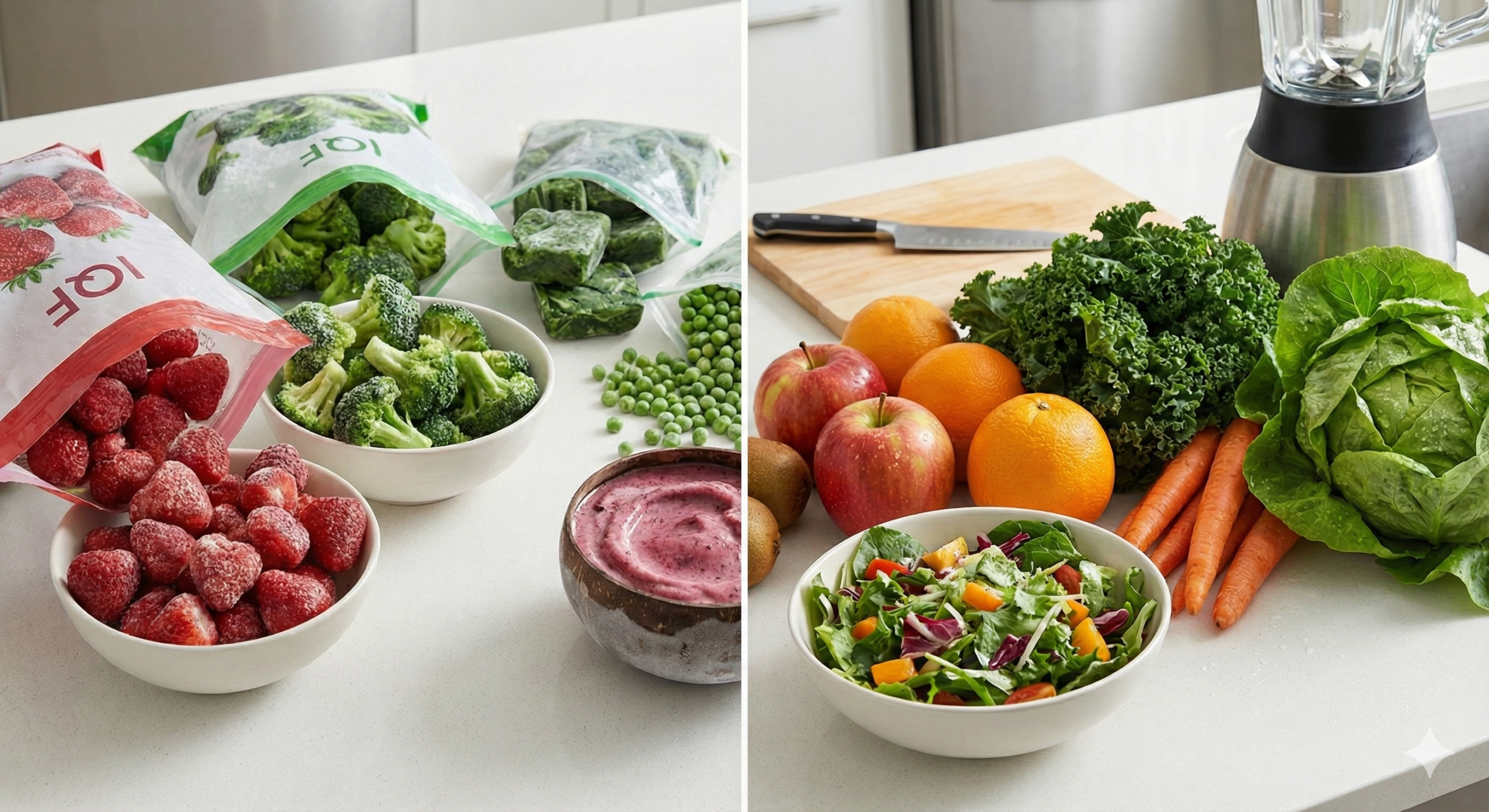
Frozen vs. Fresh: What Really Matters
“Fresh is always better” is one of those ideas people repeat because it sounds right. In reality, the best choice depends on how the produce was handled, how long it traveled, and when you’re actually going to use it.
Frozen fruits and vegetables aren’t “fake food.” They’re real produce that’s typically processed quickly after harvest and stored at low temperatures to slow down nutrient loss and spoilage.
Nutrition: Is Frozen Less Nutritious?
Not automatically. Many fruits and vegetables are frozen close to peak ripeness, when their nutrient content is strong. Fresh produce, on the other hand, might spend days (or longer) in transport and storage before it reaches your kitchen.
A key detail: many frozen vegetables are blanched (briefly heated) before freezing. This helps preserve color, texture, and quality during storage. Blanching can slightly reduce certain heat-sensitive vitamins, but freezing also helps protect nutrients long-term by slowing natural degradation.
Bottom line: Frozen produce can be nutritionally comparable to fresh, especially when “fresh” has been sitting around for a while.
Taste and Texture: When Fresh Wins
Frozen produce is excellent for:
-
smoothies
-
soups
-
sauces
-
stir-fries
-
baking
-
meal prep
But some items can lose crispness after freezing and thawing. If you need a crunchy bite (like a raw salad), fresh may be better.
Tip: Some frozen vegetables cook best directly from frozen (no thawing), especially for roasting, stir-frying, or steaming.
Convenience: The Underrated Advantage
Frozen produce is:
-
pre-washed and pre-cut in many cases
-
available year-round
-
easier to portion
-
quick to use for busy households and foodservice kitchens
For restaurants and meal-prep businesses, consistency is a huge plus: frozen ingredients can help standardize recipes and reduce prep time.
Food Waste: Frozen Is Often the Smart Choice
Fresh produce is great… until it gets forgotten in the fridge and turns into compost with guilt attached.
Frozen produce helps reduce waste because you can use:
-
Exactly what you need
-
when you need it
without racing the clock.
How to Choose High-Quality Frozen Produce
Look for:
-
“IQF” (Individually Quick Frozen), when available for better texture and portioning
-
simple ingredient lists (ideally just the produce)
-
no added sugar (for fruits) unless you specifically want it
-
No heavy sauces or seasoning blends (for vegetables) if you want flexibility
The Practical Answer
Choose fresh when:
-
You need raw crunch and texture
-
The produce is truly fresh, seasonal, and local
-
You’ll eat it quickly
Choose frozen when:
-
You want reliable quality year-round
-
You want less waste and more convenience
-
you’re cooking, blending, or baking
If your goal is “eat more fruits and vegetables,” frozen is often the easiest way to make that happen consistently.